- Source[De]Coded
- Posts
- AI is running your ads. Can you explain what it's doing?
AI is running your ads. Can you explain what it's doing?
Inside: Changing the channel on marketing fatigue, the reality of Agentic AI, and why 2026's best ads aren't ads at all.


Greg Mondshein & Becky Honeyman
July 02, 2026
What’s up everybody!
We are putting together one hell of a summer run, and the SourceCode crew is busy setting the standard. We are thrilled to officially welcome Redgate as our newest US AOR, a massive win for our integrated team. Over on the content side, John just broke down how to build a winning brand narrative for fintech IPOs, proving once again that our team is unmatched when it comes to deep sector expertise.
All of this growth is happening against a backdrop where everyone is trying to figure out what value actually looks like anymore as consumers tune out repetitive corporate noise. This week, we are diving deep into how brands can change the channel on marketing fatigue by shifting to agile seasonal marketing, why CMOs are deploying agentic AI faster than they can actually prove it works, and how the best brand work of the year has abandoned traditional advertising entirely. Plus, we look at the paid media industry breathing a sigh of relief now that Google blinked and delayed its forced AI Max migration.
Let's get into it.
Becky and Greg
🔍 The SourceCode Signal 🔍
To beat marketing fatigue, brands need to change the channel—and the season
As audiences tune out repetitive corporate noise, mid-year check-ins and contextual seasonal marketing offer a necessary behavioral reset.

TL;DR: Marketing fatigue is peaking as consumers actively tune out highly repetitive, generic brand messaging. To win audiences back, brands must transition from rigid, pre-planned annual roadmaps to agile, contextual seasonal marketing. By aligning creative strategies with real-time consumer behaviors and macro cultural shifts—whether that is lean-back summer relaxation or the decision fatigue of the back-to-school rush—brands can leverage real-world context to drive significantly higher ad recall and engagement.
Takeaway: Breaking through a crowded market doesn’t mean yelling louder; it means speaking smarter. Far too many enterprise teams treat their January marketing plans as unalterable gospel, but the mid-year mark requires a strategic check-in to realign with shifted consumer mindsets, economic pressures, and cultural realities. Shifting toward lighter, experiential, and simplified activations that match the consumer's current state of mind isn't a soft creative pivot—it's a requirement for resonance. Contextually relevant content drives more than double the recall of generic campaigns. True organizational agility means building the structural freedom to alter your campaign calendar the moment the room stops listening.
Consider:
For marketers, are your seasonal campaigns truly tapping into shifting consumer behaviors and mindsets, or are you just slapping a timely hashtag onto the same static product assets?
For communications leaders, do your internal reporting frameworks and agency relationships support rapid, mid-year messaging pivots, or does your corporate governance lock you into outdated assumptions?
Is your strategy shifting this season to fight off marketing fatigue? |
CMOs are deploying AI tools faster than they can prove they work
As audiences tune out repetitive corporate noise, mid-year check-ins and contextual seasonal marketing offer a necessary behavioral reset.
TL;DR: Agentic AI — systems that can plan, execute and optimise tasks autonomously — is moving out of the pilot phase and into live advertising infrastructure across enterprise marketing organisations. The shift is accelerating, but CMOs are increasingly flagging a disconnect between the volume of AI tools being deployed and demonstrable productivity or performance gains.
Takeaway: The tool adoption race was always going to outpace the measurement infrastructure needed to justify it — that's a pattern we've seen with every major martech wave. What's different with agentic AI is the stakes: these aren't passive software licences sitting unused, they're systems making decisions in real time on real budgets. Leaders who can't answer "what is this actually doing for us?" won't just look behind — they'll have ceded meaningful control of their media spend. The productivity gap isn't a technology problem. It's a governance and accountability problem that lands squarely on the CMO's desk.
Consider:
For marketers, do you have a clear measurement framework in place before the next AI tool goes live, or are you still building the dashboard after the fact?
For communications leaders, how are you explaining AI adoption decisions to leadership and boards in terms of outcomes rather than capabilities?
The best brand work of 2026 isn't advertising — it's something else entirely
The campaigns cutting through this year are products, stunts and events, not spots. That's not a creative trend; it's a strategic signal.
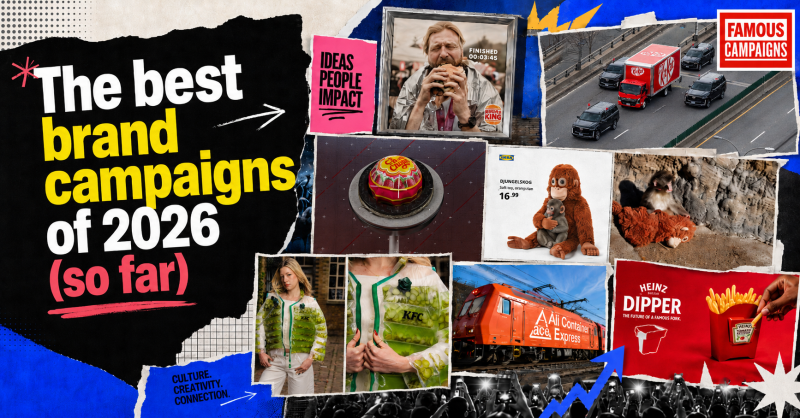
TL;DR: Famous Campaigns' mid-year roundup of 2026's standout brand work reveals a consistent thread: the campaigns generating the most cultural traction aren't traditional advertising. Entries like Back Market's "Downgrade Now" — a campaign built around rejecting upgrade culture rather than promoting a product benefit — are driven by physical activations, product decisions and genuine provocation. Reach and frequency are not the story.
Takeaway: When the best campaigns of the year share more DNA with product launches and protest movements than with conventional creative, it's worth asking what "campaign" even means anymore. Back Market's approach works not because the execution is clever, but because the idea is rooted in a position the brand can actually own and defend — and it manifests in something tangible. Brands chasing cultural relevance through content volume are going in exactly the wrong direction. The question isn't how much you can say; it's whether you have something worth doing.
Consider:
For marketers, when you brief your agency, are you opening the aperture to ideas that live outside paid media — or are you still handing them a channel plan first?
For communications leaders, is there a brand position your organisation holds that is specific and defensible enough to anchor a campaign like this, or does your messaging still try to mean something to everyone?
Google blinked on AI Max, and the paid media industry exhaled
Google's decision to delay forced DSA migration gives advertisers more runway — but don't mistake a reprieve for a reversal.
TL;DR: Google has pushed back the automatic migration of Dynamic Search Ads to its AI Max for Search campaigns from its original 2026 timeline to February 2027. The move follows industry pushback around control, transparency and performance uncertainty. June's paid media update also includes new capabilities from TikTok Symphony AI and a fresh set of ad features from Meta, continuing a platform arms race in AI-assisted creative and targeting.
Takeaway: The DSA delay is meaningful, but it's not a concession on direction — Google is still moving toward AI-automated campaign structures, and the industry will get there whether individual advertisers are ready or not. What the delay actually buys is time to develop an informed position on what you're willing to hand over to automated systems and what you're not. Teams that use this window to pressure-test AI Max in controlled conditions will be better placed in February 2027 than those who simply breathe a sigh of relief and carry on. Meanwhile, the TikTok and Meta updates are a reminder that platform-level AI is being embedded at every layer — creative, targeting, bidding — and that the locus of campaign control is shifting permanently.
Consider:
For marketers, have you defined which campaign elements require human oversight as a non-negotiable — and documented that before the next platform update removes the option?
For communications leaders, as platforms automate more of the ad-buying process, how are you maintaining a coherent brand voice when the creative and targeting decisions are increasingly machine-made?
Like what you're reading? Forward this to a friend and have them sign up here!